Students were introduced to Wassily Kandinsky's Concentric Circles painting. We talked about his life and discussed his beautiful paintings.
I taught students how to make a tree out of brown 9" x 12" construction paper which they then glued onto a 12" x 18" piece of yellow construction paper. Students then could chose from a variety of colored construction paper circles (large, medium and small) to cut out. I had copied these onto the copy machine.
This project took one, 50 minute class period.
I found this on the website www.artprojectsforkids. Great project for scissor skills!
Students created a pinch pot using self hardening clay. I don't have a kiln at my school so I find this clay works the best. It is still very fragile, but it's the best I can do without a kiln. I use Crayola's self hardening clay.
I first discussed with the students where clay comes from and shared the book "Children of Clay, A family of Pueblo Potters" by Rina Swentzell. This is a great book about a family's journey to find clay and to create art with it. It is a non fiction book with photographs. I don't know if it is still in print but I'm sure you could find a similar book.
Each student received a piece of wax paper and a small card to write their name and teacher code on to identify their clay pot later (since we aren't firing the clay)..At this level I find it is difficult for the students to write their name on the bottom of the pot so the card works out great. They just put their pot on top while it is drying. When they are ready to paint they can take a black permanent marker and write their name on the bottom.
The wax paper works great for clean up. Just throw it away when you're finished!
Since I chose to do this project in the winter, and my classroom is in the basement, it has taken a while for the pots to dry.
After they were dry, the students painted them with tempera paint.
After they were painted I sprayed them with acrylic gloss. Make sure to do this after school and with the windows opened!
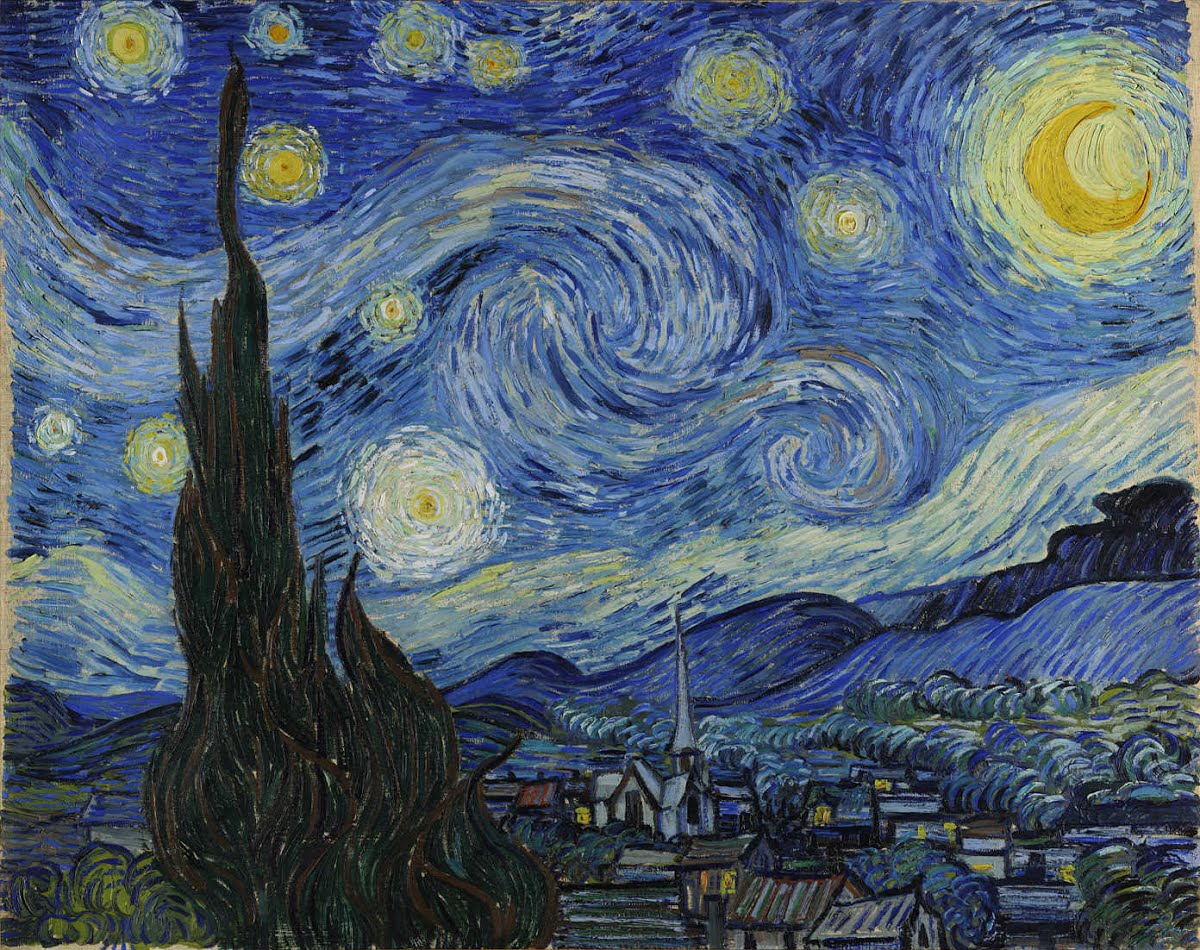
Students love the painting "Starry Night". They always get excited when I show the painting. Many students make connections to copies they have seen.
I have done many art lesson variations on "Starry Night" but I do believe this is my favorite one. I found this lesson on Artsonia.
The first day I introduced the painting and showed them many examples of architecture. We noticed the many variations of windows, doors, materials to use for building and roofs. Each student received a 12" x 6" piece of drawing or multi media paper. They sketched first, colored with crayola twistables and outline everything with a black permanent marker. I reminded them that they did not have to color the sky. They would be cutting out their city or neighborhood and gluing it onto another piece of paper.
Students then cut their buildings out, glued them onto their choice of either purple, black or blue construction paper. They then took oil pastels and drew the stars and moon. Lastly, they added glue and sprinkled glitter on it. Students really loved this project (I believe because of the glitter!).
I always like to connect the general education curriculum into the art room when ever I can.
Jasper John's number paintings are perfect for kindergarten students whom are learning to write and count numbers.
The first thing students did was to fold their paper into eight sections. In each block they were to write a big number(1-8) with a pencil and then trace over it with a black oil pastel.
Make sure students write their numbers correctly (no reversals). In each box students drew with oil pastels various patterns.
The last step was to paint watercolors over the whole thing.

.jpg!Blog.jpg)